
Get $500 off complete roof replacement (20 square minimum)

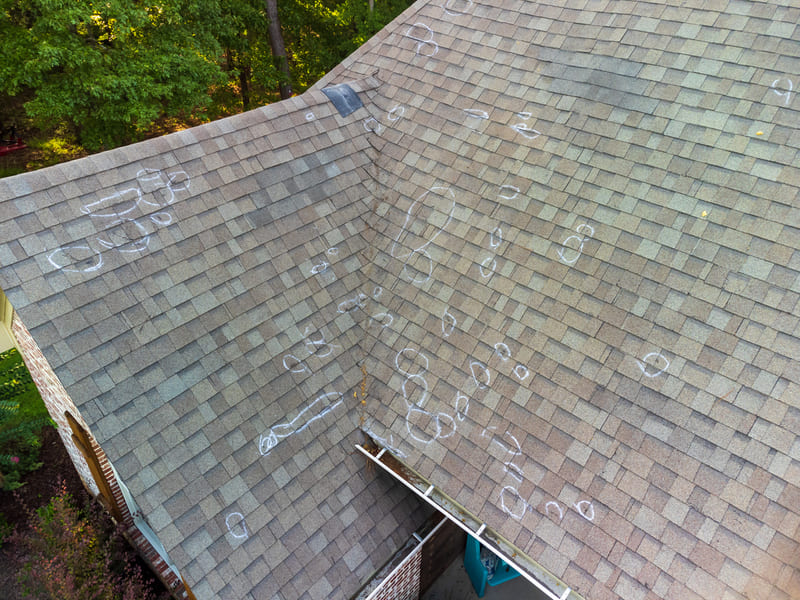
A hailstorm can come and go in twenty minutes, but the damage it leaves behind can sit quietly on your roof for months. From the ground, everything may look fine. No dramatic hole. No shingles scattered across the lawn. No water pouring through the ceiling. But hail damage to your roof often works like a bruise under the skin, it weakens the surface, shortens the life of the system, and gives water a chance to start working its way in.
For homeowners in Harrison Township and across Southeast Michigan, that matters. Our roofs take a beating from the weather already: snow, freeze-thaw cycles, heavy rain, wind, summer heat, and the occasional fast-moving storm cell that sounds like someone dumped a bucket of gravel onto the house. When hail gets involved, even a newer roof can suffer damage that is easy to miss if you do not know what to look for.
At Giovanni’s Home Concepts, we talk to homeowners all the time who are unsure whether their roof was actually damaged or just got through another Michigan storm. The good news is that there are clear warning signs. The better news is that if you act quickly, you can often prevent a small problem from turning into a much bigger and more expensive one.
Why hail damage to a roof is easy to overlook
One of the biggest misconceptions about hail damage roof issues is that the damage has to be obvious to be serious. That is not always true. Hail can strike asphalt shingles hard enough to knock off protective granules, crack the shingle mat, or bruise the underlying structure without creating visible leaks right away. Your roof may still be “working,” but it is no longer in the same condition it was before the storm.
Think of it like a windshield chip. It may seem minor when you first notice it, but with enough time, heat, cold, and stress, that tiny weak point spreads. Roof damage behaves the same way. A small impact mark can become a failed shingle. A failed shingle can become a leak. A leak can become stained drywall, wet insulation, mold growth, and wood rot. The storm may be over, but the chain reaction has just started.
Another reason homeowners miss hail damage is that the signs are not always on the shingles alone. Hail often leaves clues on gutters, downspouts, flashing, siding, window trim, and soft metal roof vents. If you know where to look, the whole exterior of the home starts telling the story of what happened during the storm.
What hail damage looks like on asphalt shingles
Asphalt shingles are the most common residential roofing material in Michigan, and they tend to show hail damage in a few recognizable ways. One of the first signs is granule loss. The granules on a shingle act like armor, they protect the asphalt layer from UV exposure and weathering. When hail knocks those granules loose, it can leave behind dark spots or areas that look slightly bare compared to the surrounding shingle surface.
You may also see bruising, which can be harder to detect from the ground. A bruised shingle may look only slightly discolored, but when inspected up close, the impacted area can feel soft or spongy. In more severe cases, shingles may crack, split, or show circular impact marks. Those marks are not always perfectly round, but they often have a pattern that stands out once you know what you are seeing.
The age of the roof matters too. Older shingles are more brittle, so hail may cause cracking or breakage more easily. Newer shingles may resist tearing, but they can still lose granules or suffer impact weakening. In both cases, the roof may continue shedding water for a while, which is exactly why many homeowners delay getting an inspection. The damage does not always announce itself right away.
Other signs of hail damage around your home
Your roof is not the only place hail leaves evidence. In fact, some of the easiest signs to spot are on the accessories and surrounding exterior materials. Dents in metal flashing, gutters, downspouts, roof vents, and chimney caps are common after a hail event. If the metal components look peppered or dinged up, there is a strong chance the shingles took hits too.
Siding can also show impact marks, especially on softer materials. Window screens may be torn or dented. Painted surfaces might show chips. Deck furniture, AC units, and mailbox posts sometimes carry the same signs. When several of these indicators appear together after a storm, it is usually not a coincidence. It is a pattern.
For homeowners in places like Harrison Township, Clinton Township, Sterling Heights, Warren, Troy, and Macomb Township, these clues can be especially useful because storms often move through one neighborhood hard while barely touching another. Your friend across town may have escaped with nothing, while your block took direct hail impact. Local, property-specific inspection matters more than assumptions.
How to safely check for possible roof hail damage
Start from the ground. That is the safest and smartest first step. Walk around your home and look for obvious signs on gutters, siding, trim, and landscaping. Check your downspouts and the ground below roof edges for excessive shingle granules. If you have dark asphalt shingles, granule piles may look like coarse black sand collecting in corners or splash areas.
If it is safe to do so, inspect your attic next. Look for fresh water stains, damp insulation, musty odors, or daylight showing through where it should not. Hail damage does not always create immediate leaks, but if the storm was severe enough to compromise shingles or flashing, the attic may be the first place subtle moisture problems show up.
What you should not do is climb onto the roof unless you have the proper training and equipment. A damaged roof can be slick, unstable, or more fragile than it appears. Even a single-story home can become dangerous fast. This is one of those situations where DIY confidence can turn into a trip to the ER. A professional roof inspection is the safer route and usually the more accurate one.
What to do right after a hailstorm
If you suspect hail damage, document everything as soon as possible. Take clear photos of any visible dents, impact marks, fallen debris, damaged gutters, or interior water staining. Write down the date of the storm and save any weather alerts or local storm reports if you have them. This documentation can be helpful later if you need to file an insurance claim.
Next, schedule a professional roof inspection. Timing matters. The longer damage sits, the harder it can be to connect it to a specific storm event, and the more time water has to exploit weak spots. A prompt inspection helps you understand whether the damage is cosmetic, functional, or severe enough to require repair or replacement.
This is also the moment to resist panic-buying. After major storms, neighborhoods often see an influx of out-of-town contractors going door to door. Some are legitimate. Some are not. If someone shows up with a clipboard, a hard sell, and a promise that they can “take care of everything” if you just sign now, slow down. Work with a licensed, reputable local roofing company that knows the area, understands Michigan weather, and will still be around if you need roofing service later.
Can hail damage cause leaks later even if the roof looks okay now?
Yes, absolutely. That is one of the reasons hail damage is so deceptive. A roof can appear intact from the yard while still having compromised shingles, loosened seal strips, damaged flashing, or weakened vent boots. The system may hold for a while, then fail during the next heavy rain, wind event, or freeze-thaw cycle.
Michigan weather is especially hard on roofs that already have hidden impact damage. Water can seep into tiny cracks or exposed areas, then freeze, expand, and make the damage worse. By the time a leak shows up on the ceiling, the original hail strike may be long forgotten. Homeowners often assume the leak came from “old age,” when in reality a storm accelerated the roof’s decline.
This is why post-storm inspections matter even when there is no immediate water intrusion. The goal is not just to find active leaks. It is to catch storm-related weakness before it becomes a bigger structural or interior problem.
Repair or replacement: how the decision is made
Not every hail-damaged roof needs full replacement. In some cases, damage is isolated to a small section of shingles or a few roof components, and a targeted repair is enough. If the roof is otherwise in solid condition and the hail impact is limited, repairs can restore protection without the cost of replacing the entire system.
But there are situations where roof replacement is the smarter move. If hail damage is widespread, if the shingles are cracked across multiple slopes, if granule loss is extensive, or if the roof is already aging, piecemeal repairs may only buy short-term time. It is a little like patching a winter coat that is thinning everywhere else. You can sew one hole, but that does not change the fact that the fabric is wearing out.
A professional roofer should assess the extent of the damage, the age of the roof, the condition of the underlayment and ventilation, and whether matching shingles are available. A good contractor will not force every inspection toward replacement. They should explain what they found, what it means, and what your realistic options are.
Understanding the insurance side of hail damage roof claims
Homeowners insurance often covers hail damage, but coverage depends on your policy, deductible, and the type of damage documented. That is why quick action and a thorough inspection are so important. If hail has caused functional damage to the roofing system, there may be a valid claim. If the issue is only cosmetic, coverage can vary.
The claims process usually starts with notifying your insurance company and scheduling an adjuster visit. Before that happens, many homeowners choose to have a trusted roofing contractor inspect the roof and provide documentation. That can help you go into the process with a clearer picture of the condition of the roof instead of trying to interpret everything on the fly while standing in the driveway with an adjuster.
The key is to stay organized. Keep your photos, inspection notes, claim number, emails, and any estimates in one place. Ask questions if something is unclear. And above all, do not delay. Insurance timelines matter, and waiting too long can complicate what should have been a straightforward storm damage claim.
Why local experience matters after a Michigan hailstorm
Roofing is not just roofing. A contractor who understands Southeast Michigan weather patterns, common roofing systems, and local building expectations brings more to the table than someone chasing storms from state to state. They know what heavy snow load does after a hail hit. They know how freeze-thaw cycles exploit weak points. They know that what looks minor in July can become a headache by January.
Giovanni’s Home Concepts serves homeowners in Harrison Township and surrounding communities with honest inspections, reliable workmanship, and straightforward communication. That local piece matters. When you are dealing with possible storm damage, you do not want guesswork or pressure. You want someone who will tell you the truth about what they see and help you make the right call for your home.
That is especially important with hail damage because the line between “probably okay” and “needs attention” is often thinner than homeowners expect. A trained eye can spot what most people miss.
When to schedule a roof inspection
If your area recently had a hailstorm, schedule an inspection sooner rather than later. You should also book one if your neighbors are finding storm damage, if you are noticing granules in gutters, if metal roof components show dents, or if your attic has new moisture signs. Even if the roof is not leaking today, a post-storm inspection can give you peace of mind or catch a problem before it spreads.
There is also value in having documentation even if no major damage is found. A professional inspection creates a record of the roof’s condition after the storm. If issues appear later, that timeline can be helpful. And if the roof is in good shape, you get the reassurance of knowing you are not waiting for a surprise stain to bloom across the ceiling after the next hard rain.
Storm damage does not always look dramatic. Sometimes it looks like nothing at all, until it doesn’t.
Final thoughts
Hail damage to your roof is one of those problems that can hide in plain sight. A roof may survive the storm visually but still suffer the kind of impact that shortens its lifespan, weakens its protective surface, and opens the door to future leaks. The smartest move is not to guess. It is to inspect, document, and act early.
If you think your home may have hail damage roof issues, get it checked by a professional who knows what to look for. A timely inspection can mean the difference between a manageable repair and a much larger project down the road.
If you are in Harrison Township or nearby Southeast Michigan communities, Giovanni’s Home Concepts offers free roof inspections and honest guidance after storms. When hail hits, you want more than a quick opinion.
You want clarity, real answers, and a roofing company that does the job right the first time.